This protocol focuses on osmolytes. Molecules that help our cells survive dehydration and heat stress. A theoretical approach that delves into the idea that having a good amount of osmolytes pre-loaded before a dry fast is critical in improving the potential benefits. Of course, you can dry fast without this precaution and still reap tons of benefits, but I think this is an aspect that can seriously increase benefits, so treat it as an efficiency factor. There's also a theory that being deficient in these is one of the reasons why some people see diminishing returns from many dry fasts. I dive into a protocol that I use by stacking the correct supplements at the right times, as well as some theories that I have yet to explore.
You thought I'd be addressing the basics of hydrating before a dry fast? You can find dozens of those videos out there. Here's a quick overview of very simple basics, but remember the Osmolyte protocol is an advanced technique that has the potential to surpass all the other regular hydrating techniques.
Why take Osmolytes?
Osmolytes are particularly crucial in helping organisms adapt to extreme conditions. The presence and concentration of certain osmolytes can be upregulated in response to environmental stresses, including extreme temperature or pressure. Osmolytes work in part by stabilizing the structure of proteins. The presence of specific proteins, their structure, and how they interact with osmolytes can influence the effectiveness of osmolyte protection mechanisms.
Actual Protocol, Research, and Theories Below:
If you have experience with experimenting with osmolytes, or anything valuable to add to this discussion please reach out to me.
Simple hydrating strategies:
- High mineral fruit and vegetable juices like Celery and Cucumber
- Electrolyte Powders
- Preloading with Sodium Bicarbonate (an excellent strategy before a dry fast)
- Progressive hydration schedule
- Water-rich Gel consumption
[Under construction] - Still experimenting along with others. Supplementing with normal levels of osmolytes is recommended no matter what. Glycine and Taurine are requirements for optimal health - but let's see if we can dial them in for dry fasting too.
Where to start if you want to consider supplementing osmolytes?
In the human body and diet, several osmolytes are commonly encountered, each playing a unique role in cellular protection and homeostasis. Here are the top 10 most common osmolytes found in food or the body:
- Taurine: Abundant in the brain, heart, and muscles, taurine helps regulate water and mineral balance in blood cells and supports overall cellular function.
- Glycine: A simple amino acid that not only serves as a building block for proteins but also acts as a cytoprotective osmolyte. Found in collagen. One of the best daily supplements you can take. Magnesium Glycinate before bed.
- Proline: Another amino acid, known for its role in protein synthesis and structure, also functions as an osmoprotectant. Found in collagen, like glycine, may also play a role in the osmoprotective capacity of an animal-based diet. This is the number one osmolyte in terms of raw power, but I still place taurine and glycine as more important to overall health.
- Betaine: Found in wheat, spinach, and shellfish, betaine protects cells against dehydration by acting as a methyl donor and an osmoprotectant.
- Inositol: Present in fruits, beans, grains, and nuts, inositol stabilizes cell membranes and is involved in cellular signaling.
- Sorbitol: A sugar alcohol derived from glucose, sorbitol serves as an osmolyte in cells, particularly in the liver and the lens of the eye.
- Mannitol: Another sugar alcohol used medically as a diuretic and a renal protective agent, and found naturally in mushrooms and algae. I wouldn't consider using it because the oral version is not well absorbed by the gastrointestinal tract. Also potential acute kidney failure (even though it's used for ocular hypertension and a lot of other water pressure diseases).
- Glycerol: The breakdown of fat cells, a process known as lipolysis, releases fatty acids and glycerol. Osmoprotectant. Glycerol can be converted into glucose through a process known as gluconeogenesis. I want to deeper dive into this since there's also a crazy potential for biohacking endurance sports.
- Alanine: An amino acid that can act as an osmolyte and is involved in various metabolic processes, including gluconeogenesis during fasting states.
- Trimethylamine N-oxide (TMAO): A molecule that stabilizes proteins and protects cells against stress caused by changes in pressure or temperature. Found mostly in fish and animal products. This may be an additional reason why an animal-based diet (low carb) makes dry fasting much easier.
Osmolyte Protocol Example
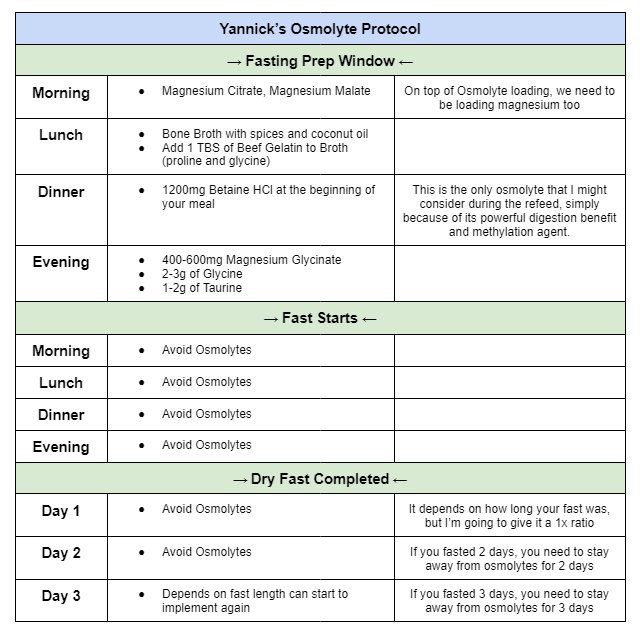
Why stay away from osmolytes after the fast?
Edema is one of the biggest risks of a dry fast. Aldosterone levels skyrocket, and the body holds on to sodium and water. It’s why we don’t OVER hydrate too early as well, but gradually keep increasing the water load. Don’t underhydrate too ;) Osmolytes in this situation may encourage too much water back into the cells which can cause bloating. Osmolytes are known as hydrating molecules. Think of them as critical in the prep, but also critical to get back your osmolyte levels after the fast (just not too soon).
Why take Osmolytes?
Osmolytes are particularly crucial in helping organisms adapt to extreme conditions. The presence and concentration of certain osmolytes can be upregulated in response to environmental stresses, including extreme temperature or pressure. Osmolytes work in part by stabilizing the structure of proteins. The presence of specific proteins, their structure, and how they interact with osmolytes can influence the effectiveness of osmolyte protection mechanisms.
Extra glycerol gets excreted pretty quickly from the body, so it doesn't seem like it would be a good osmolyte for extended dry fasting
However, it seems like the ultimate endurance sports hack. So learning this you might give your kids a few drops of glycerol before their sports games or training. Remember we create more glycerol during fasting because it's what comes out of our fat: fatty acids and glycerol. Fatty acids turn to ketones, glycerol to glucose.
Glycerol can be metabolized in the liver into glucose through gluconeogenesis, providing a source of energy. It can also be used as a building block for triglycerides and phospholipids, which are essential components of cell membranes.
Glycerol administration:
1.0 g/kg body weight + 25 ml fluid/kg body weight
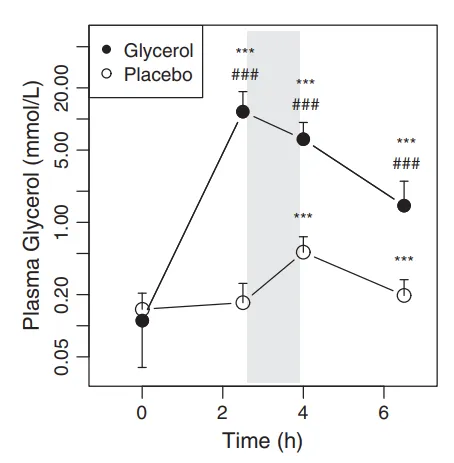
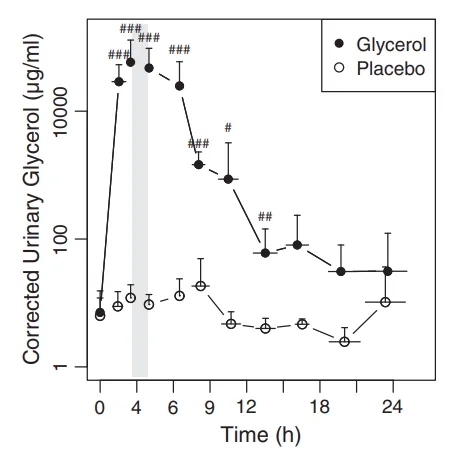
 Karsten Koehler
Here's a brief overview of how taurine, glycine, and proline might compare in this context:
Taurine
Taurine: Taurine is an amino acid that acts as an osmolyte and has a variety of other functions in the body, including bile acid conjugation, antioxidant activity, and modulation of calcium signaling. It's not rapidly metabolized and can have lasting effects on the body, making it a potentially suitable option for sustained osmotic balance during a dry fast. Taurine is also known for its protective effects on cardiovascular health and muscle function.
Taurine is not used in protein synthesis but has many other roles in the body. It's involved in bile acid conjugation, osmoregulation, and cell membrane stabilization. While it's not rapidly metabolized, taurine can eventually be excreted in bile or urine. Taurine is recommended for a wide array of situations. Before bed, it can calm the nervous system with its GABA agonist properties, but it is also used as a pre-workout, or even in the mornings for a stable, yet focused energy.
A very good candidate for pre-loading before a dry fast. It is a powerful part of a sleep stack too. I think everyone should take at least 500mg of taurine before bed.
Optimal Health Supplementation Protocol:
- Dosage: Consider a daily taurine supplementation of 500mg to 2000mg. Starting on the lower end and adjusting based on individual needs is a prudent approach.
- Sources: Taurine is available in both powder and capsule forms.
- Timing: Taurine can be taken at any time. If you find it has a stimulating effect, avoid taking it close to bedtime. Some people enjoy it in the morning, while some use it as part of a bedtime routine.
Glycine
Glycine: Glycine is another amino acid that serves as an osmolyte and is involved in the synthesis of proteins, glutathione, and other important compounds. While the body metabolizes glycine for various purposes, its role in cellular protection and as a neurotransmitter might provide more sustained benefits compared to quickly metabolized substances.
Glycine is used in protein synthesis and can be converted into serine, another amino acid, through an enzyme-catalyzed reaction. It's also a precursor for a number of important biomolecules, including glutathione (a major antioxidant), heme (a component of hemoglobin), and creatine.
We need A LOT of Glycine. I think if you're eating a meat diet, you actually need EVEN MORE glycine. So, let's take a page out of SiimLand's protocols and pump that glycine intake... seriously. The body will use up a lot of it, so it's good to have an excess, especially as an osmolyte. This one is probably the one we lack the most, and gets used up especially after rebounding from a dry fast with the cellular regeneration.
Meat-based Optimal Health Supplementation Protocol:
- Dosage: Aim for about 10-15 grams of glycine per day. This can be divided into 2-3 doses throughout the day.
- Sources: While bone broth is a natural source of glycine, achieving the desired amount solely from bone broth can be challenging. Consider a glycine supplement in powder form for ease of use and dosage accuracy.
- Timing: Taking glycine before bed may aid sleep due to its inhibitory neurotransmitter functions.
Plant-based Optimal Health Supplementation Protocol:
- Dosage: A general recommendation could be around 5-10 grams of glycine per day, considering that plant-based diets might not be as high in methionine as carnivore diets.
- Sources: Glycine supplements are usually vegan-friendly but check the sourcing to ensure it aligns with dietary preferences. Powdered forms are versatile and can be added to smoothies or other dishes.
- Timing: Similar to the carnivore protocol, taking glycine in the evening may benefit sleep quality.
Proline
Proline: Proline, particularly when paired with other amino acids like lysine, is essential for collagen synthesis and tissue repair. As an osmolyte, it can help maintain cellular integrity. Proline is not rapidly excreted and can be converted to other amino acids or glucose, depending on the body's needs, potentially offering more prolonged support.
Proline can be metabolized into other amino acids, such as glutamate. It's also essential for collagen synthesis and can be used in the repair and maintenance of tissues, especially connective tissues.
Harder to get access to proline, most likely in BCAA's and bone broth/collagen type situations. Personally I like to make homemade jello from time to time with beef gelatin as a more whole foods type of situation. Oh and obviously bone broth. One of my staples early mornings with egg to stay in a form of ketosis from the night, but still maintain protein intake.
Betaine
Betaine: Betaine, also known as trimethylglycine, is a compound naturally found in plants and animals and is recognized for its significant role in promoting cellular health and metabolic efficiency. As an osmolyte, betaine stands out for its crucial function in maintaining cell integrity and protein stability under stressful conditions. It acts by balancing cellular hydration, ensuring that the cells can withstand changes in external osmotic pressure, which is vital for optimal cellular function, especially in challenging environments. This protective mechanism makes betaine an invaluable asset in the realm of molecular biology and health sciences.
Betaine contains glycine (like I said earlier, glycine is used in so many metabolic transactions), but it's actually really important for methylation too. If you've heard of the MTHFR gene and all the hype around it, then you'll understand. Sometimes it may be hard to get, but I think one of the best ways you can ensure a good supply of betaine (which also greatly helps with liver function and in return, digestion) is to take Betaine HCl, a very popular digestive supplement that lowers your stomach acidity (improves digestion) so you take it with a meal. The betaine stimulated liver enzymes too. It's cheap and improves nutrient absorption, and now... osmolytes loading too!
Optimal Health Supplementation Protocol:
- Start with a Safe Dosage: The commonly recommended dosage of betaine is in the range of 500mg to 2000mg per day.
- Consider the Form of Betaine:
- Betaine Anhydrous (Trimethylglycine): This is the most common form found in dietary supplements. It's used to support metabolic processes and healthy homocysteine levels.
- Betaine Hydrochloride: Often used to support stomach acid levels and digestion. Be cautious with this form if you have a history of gastrointestinal issues.
- Timing of Supplementation: Betaine can be taken with meals to help with digestion. If you're taking it primarily for its potential performance-enhancing effects (like osmolyte function in cells), you might choose to take it pre-workout. However, the timing is not needed for its homocysteine-lowering effects.